State Lines Dictate Deposit Flows: Mapping How Regional Banking Rules Reshape Bonus Access and App Performance at US Sportsbooks
Clara Long · Oct 18, 2026
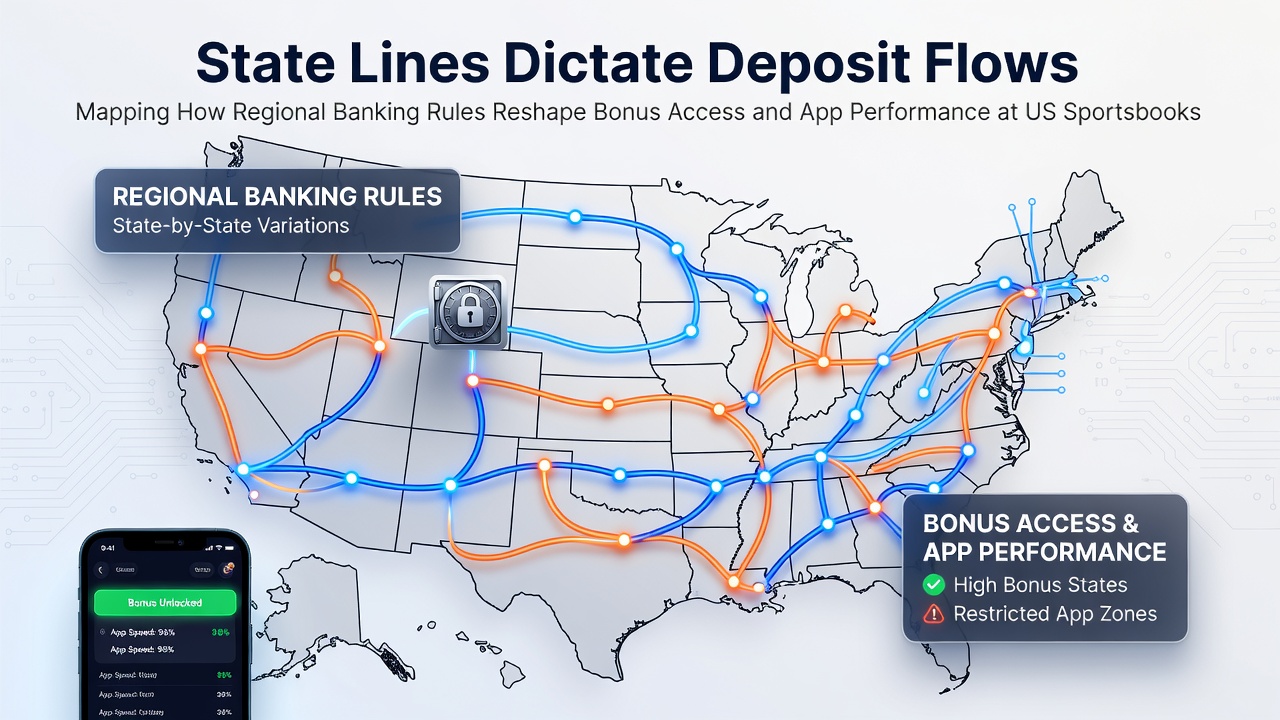
State Lines Dictate Deposit Flows: Mapping How Regional Banking Rules Reshape Bonus Access and App Performance at US Sportsbooks
Regional banking rules create distinct deposit pathways for users at US sportsbooks, and these differences directly influence which bonuses become available and how smoothly apps operate in each jurisdiction. States maintain separate frameworks for financial transactions tied to gambling, and operators adjust their payment integrations accordingly to stay compliant while delivering promotions that depend on initial deposits.
State Banking Variations Shape Deposit Options
Banking regulations differ sharply across state lines, and this patchwork determines whether users can rely on credit cards, ACH transfers, digital wallets, or other methods when funding accounts at major sportsbooks. In states with more permissive rules, such as those allowing broad credit card processing for gambling transactions, deposit flows move quickly through established banking channels, whereas stricter jurisdictions often limit options to bank transfers or state-approved processors that add extra verification steps.
Observers note that these rules stem from a combination of state gaming statutes and financial institution policies, and the result shows up in how quickly users complete transactions. Data from industry reports indicate that states permitting flexible payment rails see higher volumes of instant deposits compared to those enforcing narrower corridors, which in turn affects the frequency of bonus redemptions tied to minimum deposit thresholds.
Bonus Access Tied to Regional Payment Rules
Deposit bonuses at US sportsbooks typically require users to fund accounts through approved methods, and state banking restrictions can block or delay access to these offers. When a state limits credit card use for gambling, for example, users may turn to slower ACH options that still qualify for the bonus but extend the time before funds become playable, and this shift changes how newcomers approach sign-up promotions.
Studies from research institutions show that bonus structures adapt to local rules, with operators in restrictive states offering alternative incentives like free bets that bypass certain deposit requirements altogether. Those who've tracked wagering patterns across markets find that bonus uptake rates vary measurably by state, reflecting the friction introduced when preferred payment methods face regulatory hurdles.
App Performance Reflects Payment Integration Differences
App performance at sportsbooks often hinges on the efficiency of underlying payment systems, and regional banking rules force developers to customize integrations that can affect load times, transaction confirmation speeds, and overall user experience. In states where multiple payment processors operate without heavy restrictions, apps tend to support seamless switching between methods, whereas in more regulated environments the same apps may route users through additional compliance screens that lengthen the deposit process.
According to analyses from the American Gaming Association, apps optimized for high-volume states demonstrate faster average transaction processing when local rules align with standard banking rails, while users in constrained states sometimes encounter temporary slowdowns during peak periods as systems handle extra verification layers. This performance gap becomes noticeable in live betting scenarios where timing matters, and developers continue refining backend connections to minimize disruptions caused by regulatory differences.
October 2026 Updates Highlight Ongoing Adjustments
By October 2026, several states had refined their banking guidelines around gambling transactions, and these updates prompted sportsbooks to recalibrate deposit flows and bonus eligibility in affected markets. Operators responded by expanding support for alternative methods in newly adjusted states, which helped stabilize app performance metrics that had dipped during earlier transition periods.
Figures from regulatory filings reveal that states introducing clearer guidelines on digital wallet usage saw corresponding rises in completed deposits within the first month of implementation, and this uptick translated into broader bonus participation as users gained reliable access to qualifying payment options. Experts tracking these shifts point out that the changes also reduced error rates in transaction processing, contributing to smoother app experiences overall.
Case Examples from Key Markets
Take New Jersey, where established rules permit a wide range of deposit methods including credit cards and e-wallets, and operators there report consistent bonus redemption rates tied to rapid funding options. In contrast, states with tighter controls on financial institutions handling gambling funds often see users relying more heavily on bank transfers, which can extend the window before promotional funds activate and alter how bettors time their deposits.
Another example comes from Michigan, where recent alignments between state gaming authorities and local banks have streamlined certain ACH pathways, and data indicates this adjustment improved deposit completion times while maintaining compliance standards. Those monitoring app analytics note corresponding gains in user retention during promotional periods as the friction from payment processing decreased.
Conclusion
State banking regulations continue to define the boundaries of deposit accessibility at US sportsbooks, and these rules carry direct consequences for bonus structures and app functionality across different regions. As markets evolve through 2026 and beyond, operators maintain close coordination with state frameworks to ensure payment options remain viable while supporting promotional activity and reliable performance. The resulting landscape shows clear patterns of adaptation, with deposit flows, bonus access, and technical execution all shaped by the specific rules in force at each state line.