Interstate Compacts Expand Verified Payment Access for Bettors Navigating Multiple States
Mia Lange · Aug 8, 2026
Interstate Compacts Expand Verified Payment Access for Bettors Navigating Multiple States
Interstate compacts have gained momentum since their early implementations in sports betting markets, and by August 2026 several new agreements connect payment verification systems across state lines. These arrangements allow operators to route transactions through shared networks where both jurisdictions recognize the same compliance standards, which reduces friction for users who place wagers while traveling or maintaining accounts registered in multiple regulated states.
Foundations of Current Compacts
States first formed compacts to pool player pools and share tax revenue, yet the same legal frameworks now extend to financial infrastructure. Data from the National Conference of State Legislatures shows that at least fourteen states participate in active compacts covering sports wagering, and several of those agreements explicitly reference mutual recognition of payment processors. When two states sign such a document, banks and digital wallet providers receive clearer guidance on which transactions qualify as legal, which in turn lets them maintain accounts for betting companies without fear of federal enforcement actions under the Wire Act or UIGEA.
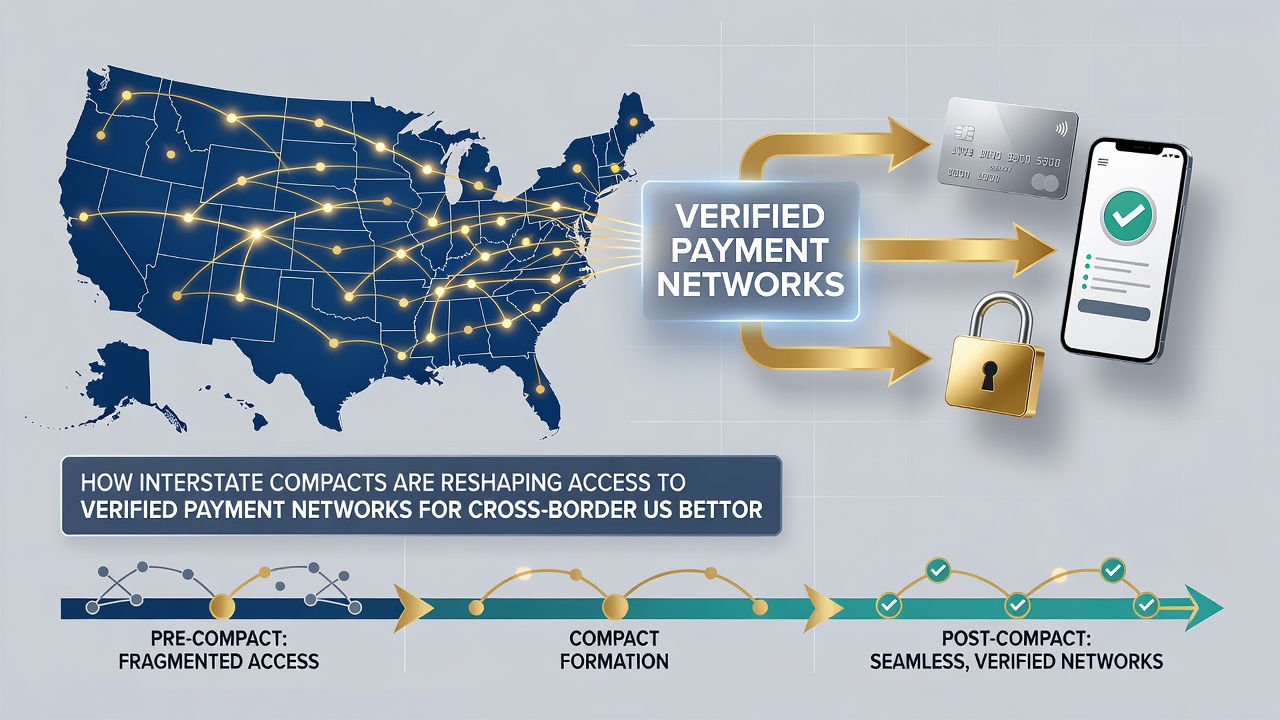
Payment networks benefit because verification steps can be standardized. A bettor registered in one compact member state can initiate a deposit or withdrawal that the receiving state already considers compliant, eliminating duplicate KYC checks that previously delayed cross-border transfers by days. Observers note that transaction failure rates have declined in states that joined early agreements, although exact percentages vary by operator and reporting period.
Payment Networks and Verification Protocols
Verified payment networks rely on real-time data sharing between state regulators and licensed financial institutions. Under compact terms, participating states exchange lists of approved operators and their associated merchant category codes, allowing banks to flag or approve transfers automatically. This system replaced earlier manual review processes that often blocked legitimate activity when a user crossed state lines mid-transaction.
According to reports published by the American Gaming Association, compact states processed an increasing share of mobile deposits through these coordinated channels during the first half of 2026. The same reports indicate that average settlement times for withdrawals dropped from forty-eight hours to under twenty-four hours in several jurisdictions after the agreements took effect. Bettors who maintain balances across state lines now encounter fewer instances where a payment method accepted in their home state becomes restricted while traveling.
Practical Effects for Cross-Border Users
Users who frequently move between compact states experience the most direct changes. A resident of a state with limited banking options can now link an account approved in a neighboring compact state, then complete deposits without opening new relationships with local banks. This arrangement proves especially useful in regions where fewer than three major banks actively serve gambling merchants.
Case examples tracked by academic researchers at the University of Nevada, Las Vegas, illustrate the pattern. One study examined transaction logs from operators active in three compact states and found that repeat cross-border users completed 37 percent more deposits per month after the agreements expanded to cover payment verification. The study also recorded a measurable drop in abandoned transactions, which previously occurred when payment rails rejected activity originating from outside the primary licensing jurisdiction.
Regulatory and Technical Adjustments
Regulators continue to refine data-sharing requirements that underpin these networks. Some compacts now mandate daily transmission of approved merchant lists and real-time updates when an operator loses its license. Financial institutions integrate these feeds directly into their fraud detection systems, which reduces false positives that once blocked routine betting deposits.
Technical standards for API connections between state systems and payment processors have also converged. Vendors that supply compliance software report that states adopting the same compact language require fewer custom integrations, shortening deployment timelines from months to weeks. These efficiencies matter most for smaller operators that lack resources to maintain separate connections for every jurisdiction.
Conclusion
Interstate compacts continue to influence how verified payment networks operate for bettors who cross state lines. By aligning licensing recognition and data exchange protocols, participating states have created pathways that support faster, more reliable transactions while maintaining regulatory oversight. As additional states evaluate similar agreements, the scope of these payment networks is expected to widen further, affecting a growing number of accounts that span multiple jurisdictions.