Borders and Bets: How State Lines Reshape Odds Comparison Tactics in Legal US Markets
Mara Richter · Aug 20, 2026
Borders and Bets: How State Lines Reshape Odds Comparison Tactics in Legal US Markets
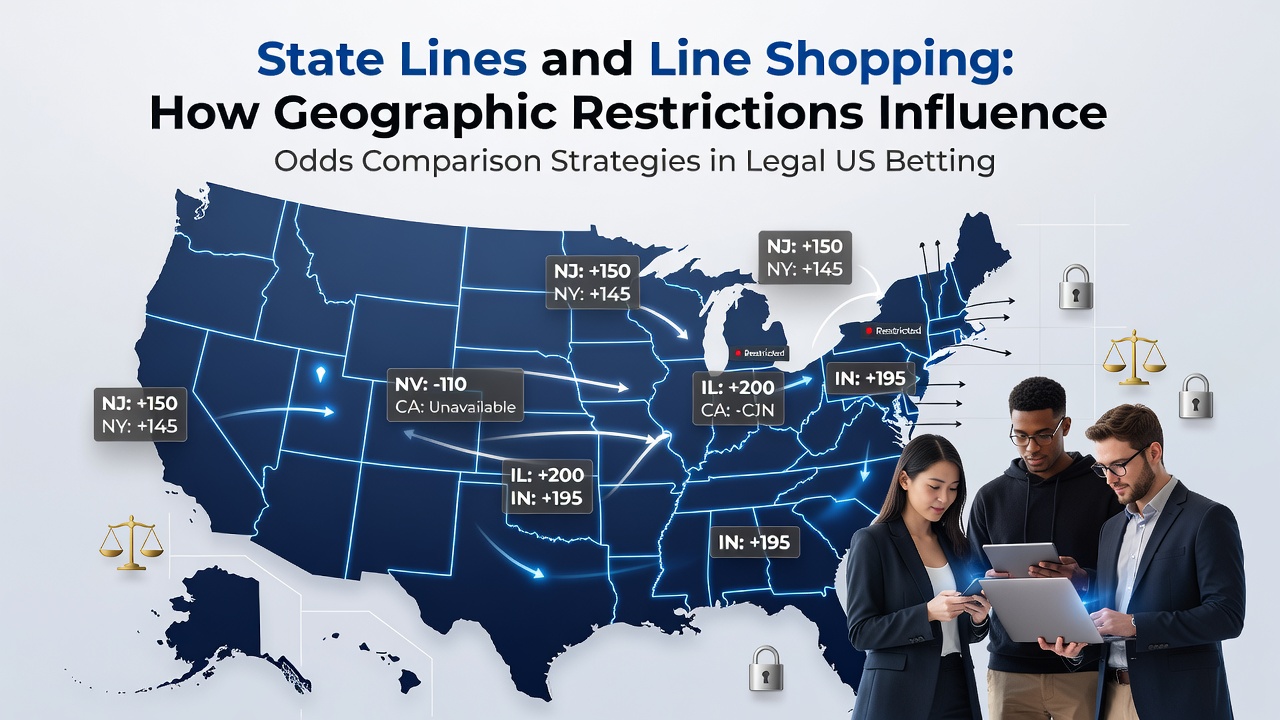
State boundaries create distinct markets where operators must comply with local licensing rules, tax structures, and consumer protections, which in turn produces measurable differences in odds across platforms. Bettors who operate within multiple legal jurisdictions often compare lines from separate state-specific apps because the same game can carry different prices depending on where the account is registered and where the wager is placed.
State-Specific Licensing and Market Fragmentation
Each state that authorizes sports betting sets its own regulatory framework, and those frameworks dictate which operators can accept wagers from residents. Data compiled by the American Gaming Association shows that as of August 2026 more than thirty states plus the District of Columbia maintain active retail or mobile sportsbooks, yet the roster of available books varies sharply from one border to the next. A bettor located in New Jersey can access a different set of platforms than someone across the river in Pennsylvania, and the resulting competition levels influence the margins operators post on identical events.
Because each state collects its own tax revenue, books adjust pricing to protect margins after those levies are applied. Researchers at the University of Nevada, Las Vegas have documented that states with higher tax rates on handle frequently see tighter opening lines on popular props and futures, while lower-tax jurisdictions sometimes post more aggressive numbers early in the week. Observers note that these differences become visible within minutes of line release when traders in one state move to cover exposure created by action in another.
Line Shopping Across Jurisdictions
Line shopping traditionally involves checking multiple books for the best price on a single outcome, yet geographic restrictions limit which books any given user can access. Users who maintain accounts in two or more states can compare prices that would otherwise remain unavailable to them. This practice requires the bettor to be physically located within the approved state when placing the wager, because geofencing technology enforces the restriction at the point of bet placement.
Platforms release lines at slightly different times depending on local market conditions and regulatory reporting windows. A sharp bettor monitoring both a New York account and a Connecticut account may see the same NFL total open at different numbers because the Connecticut book faces less immediate liability from local sharp money. Those who track these discrepancies systematically record the frequency and size of such gaps in spreadsheets that they update daily.

Regulatory Tools and Compliance Requirements
State regulators mandate that operators maintain separate risk-management teams and sometimes separate trading desks for each jurisdiction. The New Jersey Division of Gaming Enforcement requires weekly submission of pricing data, while regulators in other states impose different reporting cadences. These staggered requirements create brief windows during which lines in one state have not yet adjusted to moves that already occurred elsewhere.
Operators respond by employing location-based pricing engines that factor in expected handle from the resident population, promotional obligations tied to state licenses, and the presence or absence of competing books. The result is that the same moneyline on a college basketball game can differ by several cents depending on whether the account is registered in Illinois or Indiana. Bettors who follow these patterns adjust their comparison routines accordingly, checking the Illinois book first for underdogs and the Indiana book first for favorites on certain conferences.
August 2026 Market Developments
By August 2026 several additional states had completed their licensing processes, expanding the total number of active jurisdictions. New entrants introduced fresh competition in regions that previously hosted only one or two books, and early data indicated that opening lines in those states were wider than in mature markets. Existing operators adjusted their national pricing models to account for the new liquidity pools, which produced occasional cross-state arbitrage opportunities lasting several hours before lines converged.
Payment processors also adapted their settlement procedures to accommodate the expanded footprint. Users who previously relied on a single state for all action began splitting bankrolls across newly available apps, and transaction logs from those processors showed increased volume in the first weeks after each new launch. The pattern repeated in prior years whenever a large state came online, suggesting the behavior is structural rather than temporary.
Practical Strategies Employed by Bettors
Those who maintain multiple state accounts typically organize their comparison workflow around the release schedule of each book. They open lines from the first available jurisdiction, note discrepancies, and then wait for slower markets to catch up before committing larger stakes. This sequence requires careful timing because each app enforces its own cut-off for game start times and because travel between states is sometimes necessary to place teh actual wagers.
Software tools that aggregate prices across permitted jurisdictions have appeared in app stores, yet they still require the user to switch accounts manually when placing bets. Data from one such aggregator indicated that the average price improvement from systematic multi-state shopping ranged between three and seven cents per dollar wagered on major-league totals during the 2025-2026 season. The same dataset showed that the largest gaps occurred on midweek events with lower overall handle.
Conclusion
Geographic restrictions segment the American betting market into discrete regulatory zones, each with its own set of operators and pricing dynamics. Bettors who navigate multiple zones gain access to a broader range of odds and can exploit temporary differences created by staggered releases, varying tax burdens, and local market conditions. As more states complete their licensing processes, the number of available zones continues to grow, and the complexity of comparison strategies increases in proportion. Regulators continue to refine their reporting requirements, which in turn shapes how quickly lines move from one jurisdiction to another. The structure of the market therefore remains defined by state lines even as technology makes those lines more visible to attentive users.